
CANADA TIME ZONES
Canada uses six primary time zones. From east to west they are Newfoundland Time Zone, Atlantic Time Zone, Eastern Time Zone, Central Time Zone, Mountain Time Zone, and the Pacific Time Zone.
In most of Canada Daylight Saving Time begins at 2:00 a.m. local time on the second Sunday in March. On the first Sunday in November areas on Daylight Saving Time return to Standard Time at 2:00 a.m. During Daylight Saving Time turn your clocks ahead one hour.
The names and abbreviations frequently used to indicate the current local time in each time zone change along with Daylight Saving Time. Eastern Standard Time (EST) becomes Eastern Daylight Time (EDT), and so forth. Some areas of Canada not using Daylight Saving Time include, Fort St. John, Charlie Lake, Taylor and Dawson Creek in British Columbia, Creston in the East Kootenays, and most of Saskatchewan (except Denare Beach and Creighton). Yukon Territories is observing Pacific Daylight Saving Time year round or the equivalent to UTC-7h Mountain Standard Time.
In 2011 Newfoundland and Labrador proclaimed an amendment to the Standard Time Act which puts their observance of Daylight Saving Time in line with the rest of Canada effective November 6, 2011. Previously, Newfoundland and Labrador began and ended Daylight Saving Time one minute after midnight (12:01 a.m.) local time.
Previously, Canada had observed Daylight Saving Time from the first Sunday in April until the last Sunday in October. However, through legislation passed in 2006, Daylight Saving Time now begins three weeks earlier on the second Sunday in March and ends on the first Sunday in November.
Canada Time Zone Map
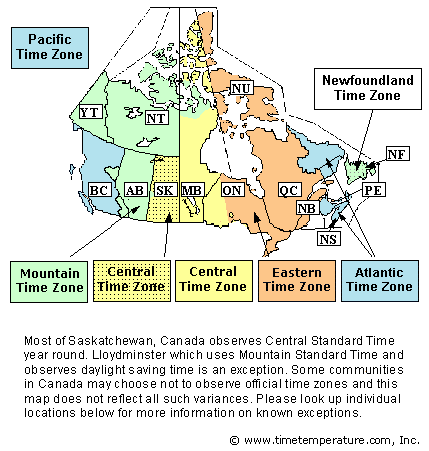
| Pacific Time | Mountain Time | Central Time |
| Wednesday 7/30/2025 10:40 PM PDT |
Wednesday 7/30/2025 11:40 PM MDT |
Thursday 7/31/2025 12:40 AM CDT |
| Eastern Time | Atlantic Time | Newfoundland |
| Thursday 7/31/2025 1:40 AM EDT |
Thursday 7/31/2025 2:40 AM ADT |
Thursday 7/31/2025 3:10 AM NDT |