
EUROPE TIME ZONES
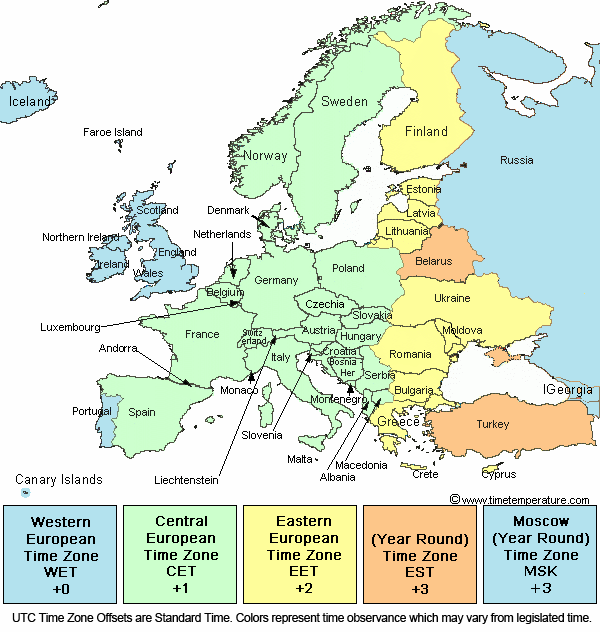
Most of Europe uses three standard time zones. From west to east the time zones are Western European Time (WET) which is UTC/GMT +0, Central European Time (CET) which is UTC/GMT+1 and Eastern European Time (EET) which is UTC/GMT +2. Western European Standard Time is the same as Greenwich Mean Time (GMT), however, during periods when Daylight Saving Time is in use, Western European Summer Time is one hour ahead of Greenwich Mean Time.
In Europe Daylight Saving Time is commonly referred to as Summer Time. Summer Time begins at 1:00 a.m. UTC/GMT on the last Sunday in March. On the last Sunday in October areas on Summer Time (Daylight Saving Time) return to Standard Time at 1:00 am UTC/GMT. The names and abbreviations frequently used to indicate the current local time in each time zone change along with Summer Time. Western European Standard Time (WET) becomes Western European Summer Time (WEST), Central European Time (CET) becomes Central European Summer Time (CEST) and Eastern European Time (EET) becomes Eastern European Summer Time (EEST). Throughout the United Kingdom in the countries of England, Northern Ireland, Scotland and Wales, Summer Time is referred to as British Summer Time (BST). Iceland and portions of Greenland do not observe daylight saving time. In addition, some local communities in Europe may not follow the official time zone rules.
The European Parliament and the Council of Ministers have voted to end the use of daylight saving time or summer time in the European Union, however, as of December 2023 the proposal has not been confirmed by the European Union and is unlikely to go into effect this year. Read More
Western portions of Russia which are west of the Ural Mountains are sometimes referred to as being in Europe. This area uses Moscow Standard Time which is now UTC/GMT +3 except for Kaliningrad Oblast in the western most portion of Russia which uses UTC/GMT +2. Georgia (formerly Republic of Georgia) uses UTC/GMT +4 and does not observe daylight saving time. The Azores, an autonomous region of Portugal, observers Azores Time (AZOT) which is UTC/GMT-1.
From west to east the six standard time zones in Europe are: (UTC/GMT -1) Azores Time Zone. (UTC/GMT +0) Greenwich Mean Time Zone, Western European Time Zone and Irish Time Zone. (UTC/GMT +1) Central European Time Zone. (UTC/GMT +2 ) Eastern European Time Zone. (UTC/GMT +2) Kaliningrad Time Zone. (UTC/GMT +3) Moscow Time Zone.
In April 2011 the Russian Parliament passed legislation to keep Russia on Daylight Saving Time year round, however, in 2014 Russia reversed that decision and ended daylight saving time on October 26, 2014. In addition Russia added two new time zones. View Russia Time Zones for more details.
Europe Time Zone Map
| Western European Time |
Central European Time |
Eastern European Time |
Moscow Time |
| Saturday 4/27/2024 2:10 PM UTC+01:00 |
Saturday 4/27/2024 3:10 PM UTC+02:00 |
Saturday 4/27/2024 4:10 PM UTC+03:00 |
Saturday 4/27/2024 4:10 PM UTC+03:00 |
Select Country From Menu Below to View Details
| Albania | Andorra | Austria |
| Saturday 4/27/2024 3:10 PM UTC+02:00 |
Saturday 4/27/2024 3:10 PM UTC+02:00 |
Saturday 4/27/2024 3:10 PM UTC+02:00 |
| Belarus | Belgium | Bosnia Hercegovina |
| Saturday 4/27/2024 4:10 PM UTC+03:00 |
Saturday 4/27/2024 3:10 PM UTC+02:00 |
Saturday 4/27/2024 3:10 PM UTC+02:00 |
| Bulgaria | Canary Islands | Channel Islands |
| Saturday 4/27/2024 4:10 PM UTC+03:00 |
Saturday 4/27/2024 2:10 PM UTC+01:00 |
Saturday 4/27/2024 2:10 PM UTC+01:00 |
| Croatia | Cyprus | Czech Republic |
| Saturday 4/27/2024 3:10 PM UTC+02:00 |
Saturday 4/27/2024 4:10 PM UTC+03:00 |
Saturday 4/27/2024 3:10 PM UTC+02:00 |
| Denmark | England | Estonia |
| Saturday 4/27/2024 3:10 PM UTC+02:00 |
Saturday 4/27/2024 2:10 PM UTC+01:00 |
Saturday 4/27/2024 4:10 PM UTC+03:00 |
| Faroe Islands | Finland | France |
| Saturday 4/27/2024 2:10 PM UTC+01:00 |
Saturday 4/27/2024 4:10 PM UTC+03:00 |
Saturday 4/27/2024 3:10 PM UTC+02:00 |
| Georgia | Germany | Gibraltar |
| Saturday 4/27/2024 5:10 PM UTC+04:00 |
Saturday 4/27/2024 3:10 PM UTC+02:00 |
Saturday 4/27/2024 3:10 PM UTC+02:00 |
| Greece | Greenland - Nuuk | Hungary |
| Saturday 4/27/2024 4:10 PM UTC+03:00 |
Saturday 4/27/2024 12:10 PM UTC-01:00 |
Saturday 4/27/2024 3:10 PM UTC+02:00 |
| Iceland | Ireland | Isle of Man |
| Saturday 4/27/2024 1:10 PM UTC+00:00 |
Saturday 4/27/2024 2:10 PM UTC+01:00 |
Saturday 4/27/2024 2:10 PM UTC+01:00 |
| Italy | Jersey | Kosovo |
| Saturday 4/27/2024 3:10 PM UTC+02:00 |
Saturday 4/27/2024 2:10 PM UTC+01:00 |
Saturday 4/27/2024 3:10 PM UTC+02:00 |
| Latvia | Liechtenstein | Lithuania |
| Saturday 4/27/2024 4:10 PM UTC+03:00 |
Saturday 4/27/2024 3:10 PM UTC+02:00 |
Saturday 4/27/2024 4:10 PM UTC+03:00 |
| Luxembourg | Macedonia | Malta |
| Saturday 4/27/2024 3:10 PM UTC+02:00 |
Saturday 4/27/2024 3:10 PM UTC+02:00 |
Saturday 4/27/2024 3:10 PM UTC+02:00 |
| Moldova | Monaco | Montenegro |
| Saturday 4/27/2024 4:10 PM UTC+03:00 |
Saturday 4/27/2024 3:10 PM UTC+02:00 |
Saturday 4/27/2024 3:10 PM UTC+02:00 |
| Netherlands | Northern Ireland | Norway |
| Saturday 4/27/2024 3:10 PM UTC+02:00 |
Saturday 4/27/2024 2:10 PM UTC+01:00 |
Saturday 4/27/2024 3:10 PM UTC+02:00 |
| Poland | Portugal | Portugal - Azores |
| Saturday 4/27/2024 3:10 PM UTC+02:00 |
Saturday 4/27/2024 2:10 PM UTC+01:00 |
Saturday 4/27/2024 1:10 PM UTC+00:00 |
| Romania | San Marino | Scotland |
| Saturday 4/27/2024 4:10 PM UTC+03:00 |
Saturday 4/27/2024 3:10 PM UTC+02:00 |
Saturday 4/27/2024 2:10 PM UTC+01:00 |
| Serbia | Slovakia | Slovenia |
| Saturday 4/27/2024 3:10 PM UTC+02:00 |
Saturday 4/27/2024 3:10 PM UTC+02:00 |
Saturday 4/27/2024 3:10 PM UTC+02:00 |
| Spain | Sweden | Switzerland |
| Saturday 4/27/2024 3:10 PM UTC+02:00 |
Saturday 4/27/2024 3:10 PM UTC+02:00 |
Saturday 4/27/2024 3:10 PM UTC+02:00 |
| Turkey | Ukraine | United Kingdom |
| Saturday 4/27/2024 4:10 PM UTC+03:00 |
Saturday 4/27/2024 4:10 PM UTC+03:00 |
Saturday 4/27/2024 2:10 PM UTC+01:00 |
| Vatican City | Wales | UTC |
| Saturday 4/27/2024 3:10 PM UTC+02:00 |
Saturday 4/27/2024 2:10 PM UTC+01:00 |
Saturday 04/27/24 01:10 PM UTC/GMT+00:00 |